Tuesday, December 8, 2009

Copenhagen Update

Here's a collection of news articles and info I found most interesting:

Most Exciting Related News: David Suzuki Video Contest

The OneEarth video is one of five winners!

Most Intriguing: Climategate


I keep trying to post comments at YouTube to respond to other comments, but they aren't showing up. The climategate issue is one I've been trying to debate. Here's some links that clarify the issue quite well I think: Deltoid, a science blog, on the code issue, and Real Climate who points out, "More interesting is what is not contained in the emails. There is no evidence of any worldwide conspiracy, no mention of George Soros nefariously funding climate research, no grand plan to ‘get rid of the MWP’, no admission that global warming is a hoax, no evidence of the falsifying of data, and no ‘marching orders’ from our socialist/communist/vegetarian overlords. The truly paranoid will put this down to the hackers also being in on the plot though."

Because Phil Jones resigned temporarily does not prove he's guilty. He's stepping aside pending the investigation. Because they got more research money in the past few years for doing climate research does not prove that they fudged documents to increase their research documents. Those are classic ad hominem circumstantial fallacies. Because it's beneficial to take a certain stance doesn't prove that he's falsifying data in order to take advantage of those benefits, it might provide a motive, but no body.

And in case people are still wondering, 1,700 scientists in the U.K. formally backed the theory that climate change is caused by human activity.

Runner Up: The Danish Text or Climate Debt

A Danish proposal that was leaked to the media suggests that, "...emissions from developed nations should be reduced by 80 percent by 2050 compared to 1990 levels." It recognizes that the developed countries are the problem, and we will have to tighten our emission belts far more quickly than the developing world. In his book Heat, George Monbiot suggested a 90% decrease and a very thorough plan to get there. It's do-able, and it won't kill us, but it will be highly inconvenient. It involves lots of renewable energy, wind, water, and solar, and more efficient appliances and vehicles, and less driving, and way fewer plane trips. There's a whole chapter on grocery stores and the massive energy loss that could very easily be stopped with insulated closed doors on the freezers. And more attention must be paid to better ways to heat homes.

Gwynne Dyer agrees. He uses a slave analogy: "You can’t say let’s reduce slavery, let’s find a compromise and reduce it 50 per cent or 40 per cent.” It has to be let's stop oil and coal subsidies and turn our attention to renewables. But, he continues, "Almost everybody involved knows what the one really fair and effective deal would look like, although they feel doomed to settle for something much worse." The rich countries, that would be us, have to take the deepest cuts - far deeper than Harper's proposed 20% of 2006 levels by 2020 along with a cap and trade system.
(This is another bit of news - Canada's the only one who's using 2006 as the base. That equates to about 3% from 1990 levels - the base everyone else is using. Oh Canada.)

Naomi Klein also agrees in Rolling Stone - but unlike Gwynne, who thinks the summit won't do anything, Klein thinks it's the optimum place to get everyone involved:
"...a chance to seize the political terrain back from business-friendly half-measures." I agree. And really, what else have we got to work with?

Here's an excellent primer on the cap and trade system by the people who brought us The Story of Stuff:


And In Canada....

The big debate is whether or not carbon emission debt should be equalized or if Alberta should have to cut back the most because they're creating the most.

below the fold

Day Two

This is the hottest decade on record according to the World Meteorological Association. Nigel Lawson can keep on telling himself that it's not continuing to warm, that we've peaked and are holding. But how long will the hold pattern last? Maybe a decade, with warming increasing rapidly after that. Yikes.

Obama declared that GHGs are harmful to human health. This is important because it means the Environmental Protection Agency (EPA) can order emission cuts without approval from congress.

See OneClimate.net for live coverage of the day-to-day events taking place during the conference.

The Mayor of Copenhagen sent postcards to hotels asking delegates to refrain from having sex with prostitutes during the conference: "be sustainable, don't buy sex." I'm not sure how sex is unsustainable; it seems to have sustained us for millennia without affecting the climate, but the sex workers have turned the campaign to their advantage by offering one free service to anyone who brings in a postcard.

And the OneEarth video has been entered in David Suzuki's video contest. Vote here for "KCI sends a video letter to the Prime Minister."

That's it!
below the fold

Thursday, December 3, 2009

More Green Bin Concerns

France Gelinas, an NDP MPP, wrote a letter to the editor of the Globe and Mail on Ontario's proposed new green bin guidelines that "...would allow sewage sludge laden with pharmaceuticals, pathogens, heavy metals and flame retardants to be mixed in with so-called 'A-grade' compost and spread on...farm fields." (Sorry I can't find a link to the letter.)

Organic food is still organic if it's sprayed with sludge, so there's no easy way to make sure your food is clean. I'll be washing my produce more consistently now, but that won't remove all the potential toxins that we're going to grow the food in...


I know people now who used to compost in their backyard, but now prefer the convenience of the green bin, and pay for compost each spring instead of digging up their own for free. People love how easy it is; they love that it all goes away every week. I don't know how to get people to see the bigger system it's all a part of - until someone gets sick. Even then it has to be someone close to home and preferably young before people will be moved to action. Otherwise we think we can adapt to anything. I'm not so sure.

How badly do we need to divert meat waste and animal feces from the landfill that we're willing to do this to ourselves? If the green bin was just to hold waste from food that grows (no meat or dairy), then it really would be great on farm fields. Bury the meat and shit with the blister packs and candy wrappers. Or better, make blister packs and laminated foil illegal as packaging. That would divert a ton by volume.

below the fold

Tuesday, December 1, 2009

How Lucky Do You Feel....Punk?!

I went to the Munk Debate on climate change tonight, and I even got a few seconds on CTV news (with another video plug) talking about the importance of the issue.

The question for debate, in a nutshell, "Is climate change the most important issue in the world right now?" The players: On the pro side: Elizabeth May and George Monbiot - I finally know how to pronounce his name (Mon-bee-oh - I previously always made him sound French). On the con side: Bjorn Lomborg and Nigel Lawson....


Oh, Elizabeth. She's hilarious, and I love her
passion, but Bjorn got the best of her, and the moderator cut her mic at one point while her arms were still flailing. The worst part of that is it's the stereotypical hysterical woman or, maybe worse, the stereotypical Canadian politician who feels free to lose composure in parliament. Not so good for our side - of the ocean, of the sexes, or of the debate. She had some of the best points, a great variety of facts at her fingertips with sources to back them up, but I'm afraid they'll not be what people most remember.

The debate itself was problematic because Bjorn doesn't seem such a denier. He was the weakest link academically and logically using ad hominems and straw man fallacies, but he was of the people in a t-shirt and jeans, admitting that he doesn't know all the fancy words others were using. That will get him lots of points with the general public. He threw out a few claims without backing them up, and having read lots on the topic, they really were out of left field. But, unfortunately, for anyone who isn't reading books on the environment in every waking moment, the information was presented with enough confidence that it appeared compelling. For the purposes of the debate, he had a strong position against the original question, but beyond that, he failed to provide any useful or intelligent information. Not many environmentalists would disagree that we need solar technology - his primary mantra.

Nigel had some very clear and important concerns with a few errors made by the IPCC. His was a truly pivotal argument because if the environmentalists make any tiny error anywhere, people will throw them out with the trash. People really really don't want to believe it's all true, so they'll jump on the minor problems as a means to dismiss the entire argument. They did it with Gore. And Nigel did this very clearly coming across as intelligent, articulate, and knowledgeable - to the world's detriment.

Monbiot was already my hero, now I totally (heart) him. He was clear, intelligent, genuine and impassioned. He was composed, yet able to take down the opposition with very strong points.

Beyond the "theatre" of the evening, here's a synopsis of the main points of the four in groups, in the order they spoke, instead of as a debate - from my biased vantage point and from my rough notes that I made with people chatting constantly behind me - with as many links as I could find (and with my editorializing in italics and parentheses) minus the many digs between the panelists. R indicates a rebuttal point...

Nigel Lawson

* The environment has become a secular religion refusing to tolerate dissent. When 100 scientists were surveyed by Von Storch they found only 8% of scientists think climate change is the most pressing issue.
- (It was an internet survey that was widely discredited as unreliable).

* There has been no further global warming this century (since 2000). Recorded temperatures are not continuing to rise. They are the highest ever, but they are not rising.
- (The best response to this is the ice-cube in a bowl analogy which nobody used. Leave a block of ice in a bowl of water to melt in the sun. Over the short term, the water and air actually get colder as the ice melts, but that doesn't mean the entire system isn't warming and it doesn't mean the ice isn't in danger of completely dissolving!)

* At worst, if we do nothing, living standards in the developed world will increased by 8.5 times instead of 9 times what they are today. That's not a catastrophe. At this time, during the worst depression since the 1930s, what we need most is cheap energy for our growth. Spending money on reducing emissions is not like buying insurance to protect us later; it's more like spending more on fire-proofing your house than the house is worth.

* Leaked e-mails by scientists have shown that even climate change scientists know it's all a sham.

* The only thing the IPCC was certain with regard to the effects on health is that climate change will reduce mortality from cold exposure. (- And increase mortality from heat exposure.)

R - On The Stern Review - They said it would cost 1% of GDP to fix climate change, but they later changed it to 2%. It was disregarded by most economists. (Bjorn's critique of it - the only criticism I could find quickly.) The figures are all assumed. Stern was being asked to justify governmental policy. It wasn't peer reviewed. It's the most extreme report.
- (When it comes to climate change projections, aren't all figures being assumed to some extent? Nobody really knows what's going to happen. It's all an educated guess. But it's not the case that your guess is as good as mine. The more educated, the better the guess.)

R - On peak oil - 29 years ago we were told there's only 40 years left of oil. Now they say there's only 40 years left. They keep finding oil. China isn't going to sign any global agreement. They are searching sub-Sahara Africa for oil. They're not looking for it because they don't intend to use it.

R - On decreasing food production after 3 degrees of warming. This is misleading: food production will increase until we hit the 3 degree mark. Then it will decrease only after that point. (An important clarification, but there's still a net loss in the long run.)

* Our greatest problem is poverty. Foreign aid helps, but economic development is better. I'm in favour of research and development of green technology.


Elizabeth May


* Experts from the IPCC should be here instead of us. And a better question for us is how should we act. Scientists surveyed by the UN claimed the top threat to the world is climate change followed by the water crisis.

* This is the biggest problem. In June 88, in Toronto
at Our Changing Atmosphere - Implications for Global Security, Canada was first internationally. (She quoted the first line of that report, more or less: climate change is 2nd only to nuclear war as a threat.) And Thatcher said in 1990 that "...the threat to our world comes not only from tyrants and their tanks. It can be more insidious though less visible. The danger of global warming is as yet unseen, but real enough for us to make changes and sacrifices, so that we do not live at the expense of future generations." I spoke with the king of the Lasutu who have the 3rd highest rate of HIV/AIDS. I asked if it's wrong to spend on climate change instead of poverty or AIDS. The question angered him, and he replied that climate change makes HIV/AIDS worse every day because the people can't grow their own food anymore.

* Humanity has changed the chemistry of our atmosphere - we have over 30% more CO2 than in the last million years. We know this from dating ice with air bubble in it. We know we're doing it, and now we have to reduce fossil fuels and protest forests. We're currently at 387 ppm of CO2. The most it's ever been pre-industrialization is 280 ppm.

* Some are uncertain about climate change because it's hard to observe. Temperature can't be looked at year to year because of time lags. We have to look at temperature changes over decades to see that it really is being affected. Millions of square feet of arctic ice is gone - much faster than projected by the IPCC. In BC we see the pine trees dead because there hasn't been a typical cold snap to kill off the beetles.

R- On "climate-gate" - Scientists had e-mails illegally hacked. All people found is that they're having problems completely agreeing on their research. But many points are being taken out of context to make them look unsure about climate change in general. What they found was a discrepancy between NASA temperature figures, which suggest that 2005 was the warmest year with 2007 and 1998 tied for second, and the Hadley Center which found temperatures decreased after 1998, but they didn't include data from the Arctic.
The scientists aren't questioning climate change, just a minute point of degrees. The only thing climate-gate has in common with Watergate is that what was stolen is immaterial; what's really important is to find out who the burglars are and why they're doing the stealing.

* We know enough that we have to act. We've run out of time for procrastination. We gave $4 trillion to help the auto industry, but we don't want to devote the same amount towards reducing emissions. We're calling for efficient technology like low flow tidal, but it's kept from the market because the payback time is long. We already have the technology to fix the problem, just not the political will. Canadians waste more energy than we use. We need to improve. We have to look at technology, but it starts with a commitment to move away from oil. The stone age didn't end because we ran out of stones. We found something better and easier to use.

* We need poverty reduction as part of climate change reduction, more solar and wind as part of our strategy, and protection of the world's forests. The Amazon is asking for help to save its forests because of the illegal logging there. But the biggest issue is the one that's moving in an accelerating fashion. Once we lose the permafrost, nothing we do will help save us. The Arctic ice has an albino effect, reflecting the sun's rays back. The dark ocean will absorb more heat from the sun. We're headed for a dangerous positive feedback loop.


Bjorn Lomborg

* The question forces us into a false dichotomy - either climate change is the worst thing, or we're an enemy of climate change science. It's not our defining crisis - there are 3 billion in poverty and 4 billion without water. At the Copenhagen Consensus we look for where we can do the most good for the world, where we should put our money, and it's in nutrition, agriculture, immunization, and schooling of girls.

* We need to be smarter about climate change. The costs are phenomenal at $40 trillion. (For whom and under what time frame?) Buying the cure is much more costly than the illness.
- (The Pembina Institute estimates that for Canadians, reducing emissions by 40% will result in a decrease in GDP from 2.4% to 2.1%. That's like someone making $80,000/year and having a salary cut to $70,000. We'll notice it in a few less nights out, but we'll still be relatively well-off.)

* We need to invest in green energy technology. Only if solar panels are cheap will we solve global warming. We can't forget all the other problems. Don't promise cuts; promise R&D. We need to listen to scientists and economists. There's a right way to save species like making countries rich, so they'll protect their own forests. We need efficient technology, so people can live better worldwide. The same money that saves one person by decreasing emissions can save 5,000 people if it's spent on agriculture. The money we need to stop poverty would slow down climate change by six hours. We don't need to reduce emissions to help the AIDS crisis; we just need to hand out condoms! (I would like to see the sources for these claims.)

R - The Stern Review is disparaged universally by economists. The other research indicates damage from climate change at -1%, it will benefit us, to 4%; not 5-20% like Stern reports. And you can't just pick one economist to show it's true. Climate change is real, but the proposed solution is rubbish.

R - Even if China doesn't agree to change, they will reduce emissions by 40% anyway through efficiencies because of newer technology. (I find this one hard to believe too.)


George Monbiot

* How lucky do you feel? We must prepare for the worst case. The opposition's claims are more optimistic than all reports I've seen. Eight of the ten warmest years ever have been since 2001.

* The Stern Review (in full) found the cost of preventing climate change will be 1% of GDP; the cost of living with climate change will be 5-20% of GDP.
R - If the government influenced the report, they did it in the wrong direction. They asked how much it would cost to fix climate change and found it would be more than expected. Stern reviewed peer-reviewed literature to develop the report. It was an "uber-review."

* We can adapt for a few decades here with drip irrigation, air conditioning, and new crop varieties. But in the developing world they won't have access to new technologies. In some areas like Kenya droughts used to be every 40-50 years, now they're every 2-3 years. The people are adapting with AK47s. They're killing each other because they're desperate.

* I'm concerned with poverty, disease and hunger. And climate change exasperates all these crises. It increases AIDS because in Malawi, climate change causes drought. This forces the men off the land to find work elsewhere. They meet prostitutes and bring AIDS back to their families. It's not a choice between poverty or climate change. We don't need to take money for climate change from foreign aid. We can take it from coal/oil subsidies or from the money being used for the Iraq invasion. We spend very little on foreign aid already. The $3.2 billion spent in Iraq would bring solar powered electricity to all of Africa. We can help with poverty without power stations and mining fossil fuels which endanger the very lives we're trying to save.

* It's not a choice over costs as if we either spend nothing or everything on the climate. Just to maintain energy supplies from now to 2030, will cost $25.6 trillion. Because oil is in the hands of OPEC, it will cost a transfer of wealth of a further $30 trillion. It's not a choice of carrying on and not spending or spending. Either way we have to spend a lot, and that's if oil doesn't get depleted. A temperature rise of over 3 degrees will result in a net decrease of food. Our population will rise to 9-10 billion within this century. Already millions are going hungry even with a global food surplus. We can't create a false choice between climate change and poverty.

R- More agricultural technology will not mean more food if it stops raining for years. Our ecosystem doesn't respond to market forces the way some economists suggest it will. It's not just about what to do, but what to stop doing. If we keep eating cake, but add in a salad, we won't lose weight because of the salad. If we keep using oil, but add in a little solar, it won't stop the problems we're having. We need to bring people out of poverty with renewables. Instead of $30 trillion to OPEC, let's put it in new technology.

* This is not the time for intellectual games. It's the time for facing our greatest question without which we can't tackle any other question on the table: Do we carry on dumping costs on those not responsible for climate change, or do we pick up our responsibilities and produce a response to commensurate with that crisis?

below the fold

Thursday, November 26, 2009

OneEarth Video-Letter to Stephen Harper

Finally, here's the OneEarth video-letter to Stephen Harper that I wrote about back here.

Before It's Too Late: Harper's Song


Partial Credits, Timeline and Thanks...

* Andrew Matheson and Janice Cooper came up with the idea of doing our own version of Will.i.am's "Yes We Can" video at an EcoSchools conference at the board office on Thursday, November 5th.
* India Mcalister and I wrote the words over the weekend.
* Mr. McGrath, Mrs. Mark, and Mr. Allt gave up a spare to play guitar.
* Janice, India and Thomas Putman came in one night after school to sing.
* Most of students in the OneEarth club sacrificed their MSIP classes on November 12th and 13th to film students in classrooms all over the school.
* Many many students and teachers gave up valuable class time to be filmed.
* Andrew and a few other students edited for hours over the following week.
* We showed it to the OneEarth group on November 23rd, and it was realized we need some sub-titles because some classes were too quiet and others weren't in unison enough to really hear with the guitar and singing mixed in. (And we thought we were done!)
* We premiered it at After Hours yesterday, and it was featured on CTV News!

* Thanks to Mr. Strangways for use of the video equipment and many many thank-yous to Mr. Papoutsis and his students for giving us the space and help needed to edit.

below the fold

Munk Debate on Climate Change

There's a climate change debate happening on Tuesday, December 1st in Toronto. The live debate is totally sold out, but there's a live feed being broadcast all over Canada. Locally, it's at the CIGI on Erb Street - attached to the Seagram's building.

The debate is part of the "Be it resolved..." series. This time it's "Be it resolved climate change is mankind's defining crisis, and demands a commensurate response." (Why mankind instead of humanity? So much for gender-inclusive language.) The debate features Elizabeth May, leader of the Green Party, George Monbiot, author of Heat and Guardian columnist, Bjorn Lomborg, professor at the Copenhagen Business School and author of The Skeptical Environmentalist, and Lord Nigel Lawson, former Chancellor of the Exchequer and author of An Appeal to Reason: A Cool Look at Global Warming who wants to abolish the IPCC and who is the father of Nigella Lawson, the most sensuous cook on T.V.

I've already read Heat, but I hope to at least skim the other two books before Tuesday. Of the four, I've only seen Elizabeth May debate, and she's fantastic. This looks to be one meaty line-up!

That's it.

ETA - The Globe and Mail had an interview with Bjorn yesterday. It's not as oppositional as I was anticipating. He thinks there's some benefits to climate change, which is a very half-full way of looking at it all, and he thinks we should focus on promoting solar power instead of focusing on reducing emissions. Of course we should.
below the fold

Tuesday, November 24, 2009

Call Steve!


If you haven't written to Harper or Prentice or your local MP yet to convince somebody to do something about Canada's embarrassing emission levels, you can just call Steve instead! He's at 1-613-992-4211. If you're up to it, video tape it and send your submission to David Suzuki.

If you don't have time to call, you can just sign the on-line petition at the link.

Our video-letter is finished. I previewed it to our club and my family, and they both thought it needed sub-titles. So, alas, it's not quite done yet. The classes didn't always speak well in unison, so it sounds muddled with the singing and guitar at the same time. It's clearer with Obama giving a speech. Ah well. Sub-titles it is. I get to learn another new skill!

Look for the really finished video here Thursday morning!

That's it!
below the fold

Saturday, November 21, 2009

Foil Nestle in Aberfoyle

Never depend upon institutions or government to solve any problem. All social movements are founded by, guided by, motivated and seen through by the passion of individuals. - Margaret Mead

I'm using this quotation again because it fits a different issue that has more of a local impact to me. Nestle's water grab in Aberfoyle.

Here's the issue...


The Ontario Ministry of the Environment (MOE) issued a two-year Permit to Take Water (PTTW) to Nestle in 2001. It was renewed in 2003, 2005, and 2008. So Nestle can legally take water from Aberfoyle. But just because it's legal, doesn't make it right. As you might have seen in The Cove, governments and ministries sometimes get surreptitious payments or benefits of one kind or another if they'll allow activities to continue that aren't truly in the public's best interest. That's how lobbying sometimes works, even though it shouldn't. Now Nestle want to use a backup well to maximize their yield.

In 2005, Great Lakes-St. Lawrence River Basin Sustainable Water Resources Agreement was signed by Ontario. It strengthens the requirements for the government to ensure that water taken from the Great Lakes basin won't have any adverse impacts on any source watershed.

In 2006 a Clean Water Act was passed that ensures that communities can identify potential risks to their drinking water supplies, and take action to reduce these risks.

In 2007, neighbouring townships had watering bans and a Level 2 low-water condition in the area. Access to this public well would have alleviated this condition. It seems clear that the Nestle PTTW is inconsistent with the objectives of the agreements and acts passed by the provincial government. So concerned citizens petitioned to get the MOE to review the PTTW, and the ministry turned down the request because they didn't provide any technical, scientific or other evidence to indicate that the decision to issue the former permit was flawed.

Currently the MOE is supporting Nestle. They cleaned up some pollution, so the MOE is letting them expand. Very nice.

There was a recent letter to the editor by David Lunman expressing some concerns. Unfortunately he doesn't include his credentials or sources. He claims Nestle is pumping water faster than the aquifer can recover. Nestle hopes to take 3.6 million litres/day of groundwater.

Nestle was quick to reply (can't find a link, sorry). Their main point is that everything they're doing is legal and that the MOE is monitoring the well to ensure it's sustainable. Nestle doesn't want to dig a new well to get more water, but merely to sustain the levels currently taken. Nestle is currently taking 3.6 million litres/day.

According to one report, Nestle paid a one-time fee of $3,000 to access the well, and they are required to pay the province $3.71 for every million litres of water extracted, or about $14/day if they take their maximum allotment. Wellington Water Watchers estimated that if Nestlé bought that same amount through Guelph’s municipal water system, it would pay about $2,700 a day.

First of all, the fact that Nestle wants a new well to get the same water seems to belie the claim that the current well is actually sustainable. Curious.

But even stranger, how can the province sell our water to a private corporation for re-sale at all? I mean how many free lunches is John Gerretsen getting for letting a corporation rip-off his province? Or is it sadder than that. Is he being bullied by the brutes? If you're reading this, take a minute to e-mail him and ask him precisely that!

This Wellington Water Watchers have created a fantastic website. Take a minute to look around there. And, teachers, they have a great "Message in a Bottle" initiative for schools! I wish I had known before we ran our re-usable bottle campaign. And they have a handy form you can complete for more info, and suggest we boycott all things Nestle. Make sure you let Nestle know you're doing this too. It just takes a minute to write an e-mail.

Maude Barlow agrees. "There's a huge backlash on campuses and in some restaurants," claims Barlow. "The 'in' thing now is not to serve bottled water." This makes me all the more upset that we couldn't convince the Waterloo Regional District School Board to ban water bottles. They almost did, but bailed after one trustee thought kids would turn to pop instead, so they'd all get diabetes from not having access to bottles of water (regardless of the many water fountains in our schools).

In the movie FLOW, Barlow complained specifically about Nestle. They own 70 brands of water. In Michigan they're pumping at 450 gallons/minute – drying up the river beds and causing significant adverse impact. Citizens sued after much protest. Nestle hired a P.I. to harass citizens who signed the petition. Nestle lost the first round, but won on appeals. Now they have a right to pump where ever they want in the US, but at a slightly slower rate. Nestle leases the property from the city to do the pumping, so the city sees some money, but not much.

By 2020, half the world won’t have water. Even in the Roman Empire water was seen as a public right that can’t be privately owned or sold for profit. If diversion of water affects people it should be considered unlawful. Legally, in the U.S., it’s considered unconstitutional to stop water pumping unless you personally own property that’s being affected.

Dammit, let's make sure that doesn't happen in Canada too!

below the fold

There IS No "Away" - My Beef with Green Bins

We have the green bin in our neighbourhood now. It's nice to have someplace for our kitty litter and dog poop and bones which clog up our digester, but I still use our composter for most food waste. And I'm still very wary of the program for a couple of reasons....


The bins collect meat, dairy, bones, and feces from carnivorous animals which have a high bacterial content. The stuff is mushed together and heated to high temperatures to try to kill off the bacteria, but it's not always successful. Then it's all used as fertilizer on our crops along with some sewage sludge. And we wonder how lettuce can give us e-coli which can be fatal.

A colleague asked, but what about the fact that people have used animal waste and their own waste on crops on the family farm for centuries. The key word there is family - it's a known environment. It's not a problem to fertilize with manure when you know the people and animals involved. It's only a problem if someone in the line-up is sick. And that's impossible to know when we work from such a large and unmonitored base.

It's the same with backyard composting compared to municipal composting. I know that my compost doesn't have any weed seeds tossed in or any leaves from a diseased tree in the mix. Municipally, I can't be too sure if the dope on the other side of town is as careful as I am. So the city wide compost could be contaminated and spread disease and weeds. If you want clean fertilizer for your gardens, don't get it from the city, make it yourself in a 4 x 8 box in the backyard.

The "biosolids" they're spraying on our crops could possibly cause us all to get very sick. We have this naive illusion that the government won't let that happen to us. But don't be so sure. It's been an issue in the White House gardens even. In Ontario, 2/3 of all sewer sludge is sprayed on crops. The EFAO has been working to stop the practice completely. But it's far too convenient a way to rid of the waste. Rain to the waters and sewage to the soil. And what isn't used by the city, is sold back to you at garden centers as garden compost. Through our taxes we are paying for the city to pick up our yard waste, let it sit a while to decompose, then sell it back to us. In our region, it's twice the cost of landfilling it, and 100% more than having backyard composters and digesters. On a related note, it costs the city more than half a million a year to collect leaves. Some insist they don't have room to compost, but if they've got room for trees, surely they can squeeze a composter under one.

But beyond the way its used, the green bins allow us to maintain an insidious belief that all our crap just goes away - like dumping garbage in a moving river. Look, it's all gone! But we're a closed system, and it's never all gone. The more we think it is, the more we'll create. If we have to deal with our waste ourselves, maybe we'll have less food waste. Every bit of leftovers will be finished.

After explaining this to a friend, he asked if he should continue using it. I said, "Sure." Try to be mindful of the fact that your crap isn't disappearing when the truck takes it away. And make sure you eat organically and that you know where all your produce comes from (because sludge is an organic fertilizer). Then read The Big Necessity.

below the fold

Friday, November 20, 2009

We Could Be Heroes

"Never depend upon institutions or government to solve any problem. All social movements are founded by, guided by, motivated and seen through by the passion of individuals. "
— Margaret Mead

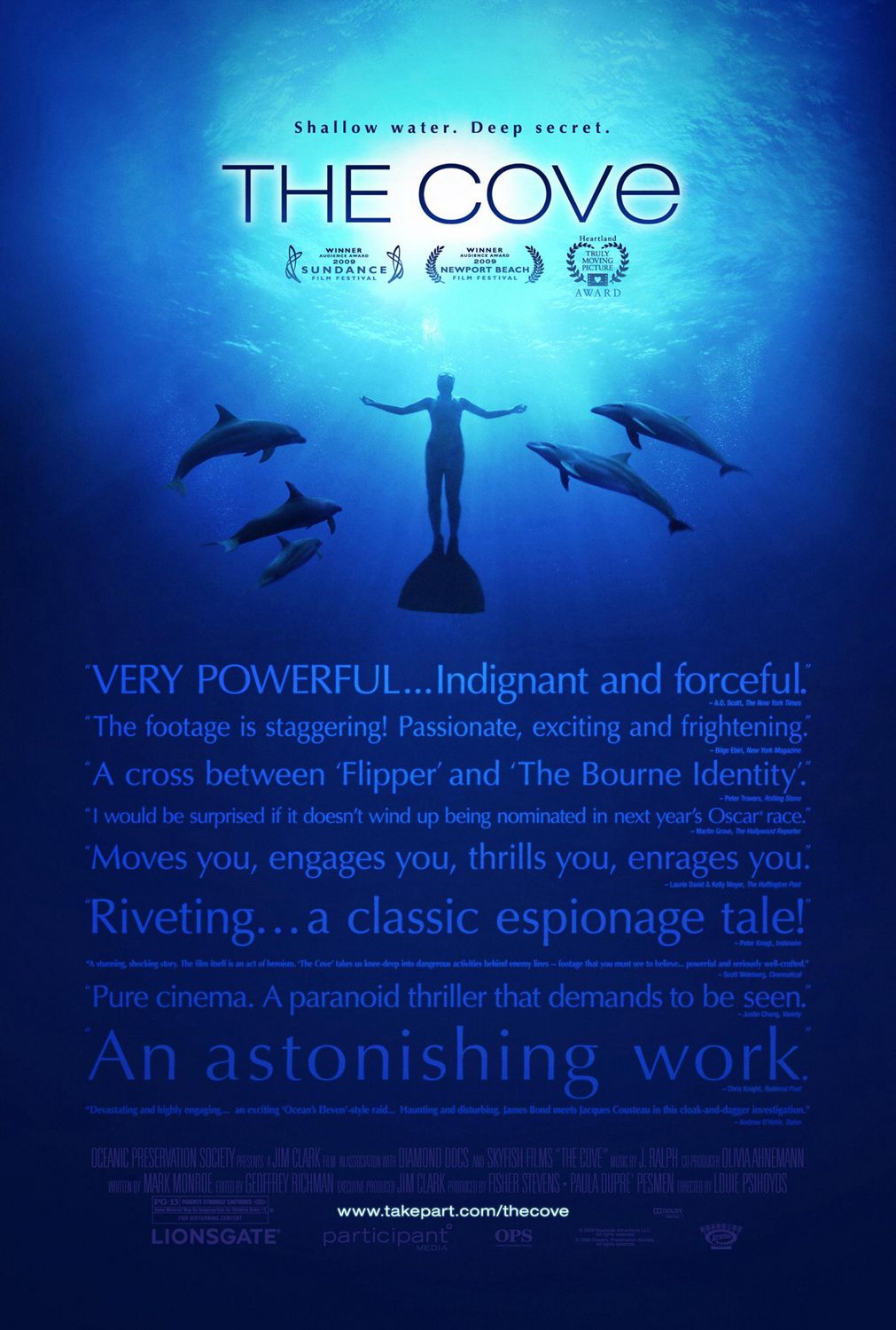
I saw The Cove tonight. I thought it would be depressing, but it was very exciting. I still don't think dolphin slaughtering compares to how we house and kill masses of cows, pigs and chickens in factory farms all over the place, but the big difference is that dolphin meat is toxic. It's full of mercury. So the slaughter for food is truly senseless. The creepiest part is that they put it in mandatory school lunches. Actually, it turned my stomach that the lunches were provided by schools and children were made to eat every last bite, and there seemed nothing parents could do to intervene on their children's behalf. I can't even imagine: my kids won't tolerate the wrong kind of mustard....


I remember as a kid being fascinated by the mercury in our thermometer. My parents were scientists, so my dad broke open the thermometer so I could explore the properties of mercury. He poured it onto a piece of metal, broke the ball apart, then rolled it around until it all joined itself again as if it desired to be in one big lump. I also remember his holler whenever I moved to touch the stuff. It's poison! It'll kill you. And I had to scrub my hands for several minutes even though I never actually made contact. Children were being forced to eat it.

It's an inspirational movie. These guys who devote their lives to the planet are in their 70s now, and they need younger folk to join the ranks. I don't have the kind of skills necessary for hiding underwater cameras, but I can write and talk and spread the word, and that includes writing letters to the political figures just in case they get on board on this one. See the Cove link at the beginning of the post for action tips. If you're really into it, picket at Marineland. I have consistently refused to take the kids there, and now I feel even more justified in ruining all the fun. I want them to learn I'm not cool with having fun at the expense of others. I've held that position long before I knew about the problems with dolphins in captivity; animals are not here to perform for us. Here's a good site fighting the practices at Miami Seaquarium. We need something similar to highlight problems with Marineland.

At one point two fishermen are walking across a beach of dead dolphins. As they make their way, one walks around the carcasses, but one walks on them, almost playfully navigating the balance act on the slippery skins. And I was reminded that it's all about "othering." As long as we think it's okay to treat any other creature as less than ourselves, as objects available for our own exploitation, we will have problems surviving together.

below the fold

Thursday, November 19, 2009

Earth-Friendly Christmas Presents

I had a conversation with a student today that got me thinking:

Student: Why should my taxes go to help others? Communism doesn't work!

Me: But socialism does - really well. Helping the weakest in society improves society as a whole, decreases health costs, crime, and so on. I actually think communism could work if we could make sure the governing parties' actions were entirely transparent and if there were many checks in place to keep corruption to a minimum.

Student: (jovially) Commie!

Me: I just laughed in real life. But I realized a better response would be to explain how close Jesus's views were to communism. I mean that in the best possible way. It's kind to give to those in need, our last two cents even, without getting anything in return....


And it reminded me about the new movie: What Would Jesus Buy?: The Shopocalypse. (Nice use of "Disney font".) The film doesn't appeal to me, but I like the question. Because even if you're like me and don't believe Jesus is the son of God, he still had some pretty good ideas. And I don't think he'd visit the marketplace over the holidays. He doesn't prove his love with perfumes and new sandals for his disciples. He acts lovingly all year long as he lunches with prostitutes and tax collectors. And that's enough.

And that's worth so much more than another scarf, or an original oil painting, or a one-of-a-kind hat, or a tree ornament, or even some sharp new earrings. If you're not convinced, a new book, Scroogenomics, makes an excellent case for stopping the madness immediately.

Jesus advises us to serve one another, to wash people's feet for them. For Christmas, we can give gift cards for skills you can offer to one another that can be collected when needed. It's free, and a better use of our time than shopping. In the new year, I'm thinking of making a "Skills for Trade" board where people can post what skills they have to offer - with a solid reference or two, and what skills they're looking for. I'll have to think more on that one.


But beyond the WWJB theory, that first question my student asked has enormous environmental implications. Why should we do anything that doesn't directly and obviously benefit us? Why turn down the thermostat? Why drive the car less? Why put litter in the garbage can instead of on the street?

Sometimes I think that if we can't circumvent this question and steer people into acting for the benefit of all, then we'll never get anywhere without massive governmental legislation forcing us to be more thoughtful (e.g. fines for not car-pooling). Because, as my student further explained, if we act for the benefit of others, the people acting selfishly will get ahead in life. All we'll have is a nice warm feeling that we've done the right thing possibly tainted by a little voice in the back of our brains telling us we're chumps.

We need people to care about the welfare of the whole over the benefits to the individual. And I sometimes think these divergent foci are somewhat inborn, that they can't be taught. Well, not by me at any rate. I'm still struggling to get my family to turn off the lights. And my partner argues with me when I insist on turning off power bars because "electricity's so cheap." But maybe it just takes more time and persistence to sway the masses.

In The Geography of Hope, Chris Turner, fellow Canadian, explains that the environmental movement isn't working because it's being run like a religion. People are made to feel guilty if they don't join the congregation, and guilt sends most of us in the opposite direction to escapist pursuits. As a movement, environmentalism isn't at all appealing. It pretty much sucks. Live a life of bodily denial or watch world-civilization collapse. Remind you of church yet?

According to Turner, we're never going to shift this attitude, instead we have to use business tactics to sell environmentalism, and make being green the cool thing to do. We need to use the tools of corporate marketing campaigns: make information simple, manageable, and sexy. I agree, yet wouldn't it be nice to live in a world of people who can see the big picture and focus on the sustainability of the entire system instead of the gains of the individual? It'd be handy if it happened before catastrophes start to bring us all on board.

The Eco-Challenge starting next week will be to buy nothing! Next Friday is Black Friday or Buy Nothing Day. We're extending it for the entire week as a challenge, and encouraging it to continue until Christmas.

In the month of December we're going to set up a booth where students can buy charitable donations for friends. There's money changing hands, but no stuff. Many students don't have a Visa card, so can't donate to charities themselves. This way, we'll donate all the money in a lump sum at the end of the drive.

And, for people who can't get past the need to give a thing for Christmas, we're also going to extend the FreeStore to include "present-able" gifts - unopened or unused items that have been at the back of the closet since your birthday or last Christmas. Bring them in, and take someone else's old presents for a loved one. It's not really re-gifting when it goes through a third party! That's the idea anyway. Hopefully people can add to it (and subtract from it) at the premiere of No Impact Man we're hosting on December 16th.

And of course we'll be showing "Story of Stuff" at lunch all next week. It's becoming a Christmas classic for me!

below the fold

Tuesday, November 17, 2009

No Impact Man and The Cove

Eastwood Collegiate's IMPACT group is running a special showing of the film The Cove this Friday, November 20, at 5:00 at the Princess Cinema for $10 each. If you want to guarantee a seat, contact Sheena Gruber, Adam Kasper or Byran Oates at Eastwood, 519-743-8265. Warn any students that it gets very graphic. The one issue I have with the film and campaign though, is that we seem to feel horrible distress over the slaughter of dolphins, but people don't rally around the painful living conditions and subsequent slaughter of cows and pigs and chickens nearly as much. Is it because dolphins look like they're smiling or that they can do tricks?

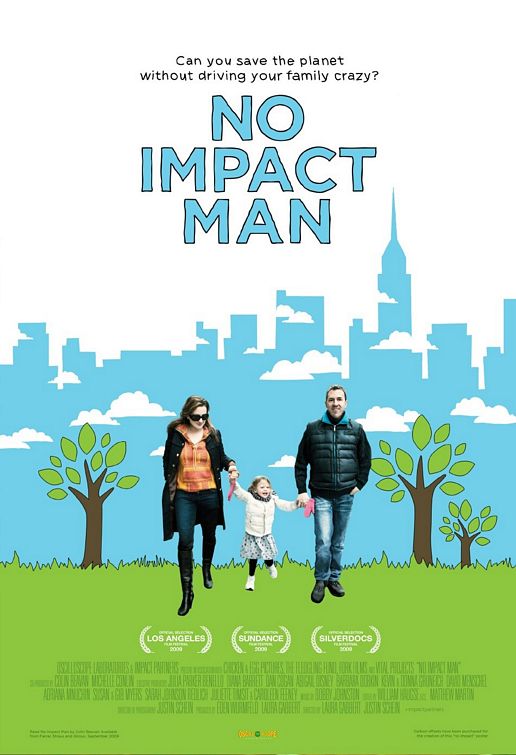
KCI's OneEarth club is hosting an international premiere of No Impact Man on Wednesday, December 16th at 7:00 pm in our auditorium at 787 King Street West in Kitchener. Tickets are $5.00 at the door, but please let me know if you plan to bring a group. We'll be selling books and DVDs and some eco-products at the door as well. Cash only please. The movie is about a family that tried to live without having an impact on the environment for one year - no gas-powered transportation, no disposable anything, no garbage. It's two days before Christmas break, but it's the perfect time to think about our mass-consumer livestyles!

That's it!
below the fold

Saturday, November 14, 2009

And Still Counting or How To Make a Video


We're still working on letter-writing this week, especially since Harper figures he'll just give the Copenhagen meeting a pass. Specifically he said he'll only go if everyone else goes, because that's what the cool kids do. Sorry for being catty, but I'm getting frustrated with what appears to be a total lack of concern. And to be fair, he's sending Prentice. But missing it sends a big message to Canadians - that this isn't one of the most important issue of the day for the Conservatives. Not by a long shot....


Last weekend there was a cute op-ed in the TO Star about Jim Prentice, and his spin on the Pembina Institute's report on climate change. The gist of the report is that typically we have a GDP of 2.4%. If we implement the current Canadian emission targets it will create a GDP of 2.2%. With the targets environmentalists are hoping for, it will reduce the GDP to 2.1%. So, really, Canada can be green and prosperous. The jobs being held in the oil industry will transfer to green energy industries. There will certainly be an adjustment period, but nothing we can't cope with for the future of our species.

Students have been working on a video - an adaptation of Will.i.am's "Yes We Can". Below is how we worked the words and vocals along with the arrangement that I painstakingly weeded out by ear. It looks better in the original table, but you can figure it out. Watch the video to see how tricky it is to hear the individual singers!

We came up with the idea for a video letter last Thursday at an EcoSchool brainstorming session. I wrote the words on Friday, which were later altered slightly by a student collaborator. We put a call out for volunteers to be filmed on Mon-Wed. Then we filmed Thurs and Friday. We edited last night, and I went in again for too many hours today. It's a huge project, but very do-able - particularly if you recognize that students are not professionals, and the video will be much looser than the original, AND the multi-layering of the video hides lots of mistakes. I just learned how to edit yesterday, and I'm already addicted. I didn't get permission to use the tune, but apparently it's okay as long as I don't try to make money off of it. You have my permission to steal the words, but a shout-out and link to the blog would be sweet.

It's not a contest, it's a protest!

So use the stuff below to make your own video if you like. Let's see how many videos we can get going! But make sure to get them to Ottawa by December 7th!

Beginning visual – teachers on guitar and a few singers waiting
This is a letter, to the Honourable, Stephen Harper, Prime Minister
G A G BB A G BBBB EE GE E GEE
of Canada
E GEE
Spoken – ind
Before it’s too late
GG G G G
Spoken – ind

This is a cry for a brand new era,
G A G G B B A G BB
That will define the destiny of our nation.
E E EG E GEE G E GE
Spoken – ind
before it’s too late; before it’s too late
GG G A G BB B A G
Spoken – small group 1 (two groups)

Kyoto required we reduce emissions, by 5 point 2 per cent, but we
DDD DE D DD EBB A A A A G G A A
Didn’t commit to it, because it might hurt our economy.
BG GA B G G DG D G G G ABGG
(tricky to fit)
Sung / group 2
before it’s too la-a-ate (“before-it’s” go together fast)
D D D B BAG
Sung –ind

So our emissions increased over 30 per cent
G G GGG AB BA BA G G
Group 2
Kyoto was called job-killing.
(no singing) Group 3
Kyoto was called economy destroying.
(no singing – unless you want to try it!)
Group 4
Our leader said CO2 is essential for life
B #FF E EEE E DDD B B
as if GHGs are good for us.
B B EEE D D B B
Sung / group 5
Before it’s too late, you need an education. – (say fast)
DD D C B B D D CCBB
Sung / group 6

before it’s too late
DBB Sung – ind
before it’s too late
#FEDBB Sung –ind
before it’s too late
#FEDBB Sung-ind
before it’s too late
DDD Sung –ind
before it’s too late
GBBB Sung-ind
before it’s too late
DDD Sung-ind
oh – before it’s too late
GBBB Sung ind
before it’s too late
DDD Sung ind

We need to reduce GHGs 40%
D D D highGG GAB GABB
Sung / Group 7
We need a national plan to reach this target.
D D D GGA B B B B CBCG
Sung / Group 8
We need you to care most about our ear-rth
D D HIGHG G A B G A B-A
Group 9
About our ear-r-rth
ALL HIGH – G A BAG
Sung
So we can repair this world
D D HIGHG AB A G
Group 10
Repair this wor-r-rld
ALL HIGH – AB D BAG
Sung
before it’s too la-ate
HIGHDD A B AG Group 11
Avant qu’il soit trop tard
BB A A G G Group 12 – French imm
before it’s too late
DD D B AB Sung
avant quíl soit trop tard
D D HIGHG B B
Sung
before it’s too late
#FF E B BAG Sung
avant quíl soit trop tard
HIGHDD A B A G
Sung
before it’s too late
BB A A G Sung
avant quíl soit trop tard
DD D B A B Sung
before it’s too late
DD D B AB Sung

We know the battle ahead will be long
(no singing) Group 13
But we have to remember that no matter what obstacles stand in our way
(no singing) Group 14 – sign language
Nothing can stand in our way,
(minor singing?)
if we commit to a change, a change to save humanity.
#F G GE E G E E G E #F GEEE Group 15

We want change – Sung – class changtting.- group 27
We want change- Sung
We want change – Sung
We want change Sung

You want us to believe, it’s not true, but if we take that chance,
(no singing?)
we might not survive to find out.
B D C BB A B BAG Group 16 – only 2nd half is sung
Crops will die , and millions will starve.
(no singing) Group 17
Places like the Maldives Islands will be swept into the sea
(no singing or guitar – just keeping beat) Group 18
The economy won’t matter, money won’t help us,
G GGGG G HIGHED DB B A G
Once climate change, crosses the danger threshold.
G DD D BB B GG A-LOWE Sung / group 19

Save our earth Sung
Save our earth Sung
Save our earth Sung
Save our earth
Sung

The hopes of the little girl in India who drinks from a sewer are the
same as the dreams of the boy who
(no singing?)
has polluted water in Nunavut.
A ABA GG G GGG
group 20
But we can see that there is a change happening in this world.
(no singing) group 21
That we can’t be divided by profits and politics.
(no singing) Group 22
But Canada CAN be both gre-en AND prosperous.
D DDD E D G GE G AGG
Sung/group 23

So together we must remember that we’re more than KCI students,
that we’re more, than just, Canadians.
(no singing)
Group 24

We’re all citizens of one ear-rth.
B B HIGHGG #F F EB
Sung / group 25

Before it’s. too. Late.

Group 26
before it’s
too
late
before it’s Random improvised singing and humming throughout these 8 bars
too
late
before it’s
too
late
before it’s
too
late
before it’s
too
late
before it’s
too
late
before it’s
too
late
before it’s
too
late
All individually spoken with it sung in the background.
before it’s too late
Spoken by teachers’little kids
before it’s too late
Teachers join their kids

If you're still reading, I have to admit, I wish I knew how to edit before I started filming. I would have filmed more complete sequences because it's hard to piece them together. And I would have done many many more takes to get them closer to perfect. But all in all, it's going quite swimmingly! We'll be done for sure by next Wednesday, which is our After Hours arts night, and the world premiere of our video (so it has to be done). Then I'll have students hand deliver it to Peter Braid's constituency office.

below the fold

Friday, November 6, 2009

Countdown to Copenhagen

This next week will be all about COP15 - the 15th meeting about climate change from all the big guns. It runs from December 7-18th, and we're hoping we can get students writing letters and signing petitions and somehow getting involved in the democratic process. Climate Action Network Canada sent out info on how to get going, and I'll pass it along here. Also check out Seal the Deal for more ideas.

We're putting up a display with the information below, and handing out half sheets of paper, double sided, with sample letters on one side and addresses on the other. But on top of that, some very dedicated students want to put together a video kind of like this, with as many students as possible to send off instead of a petition. "Before It's Too Late" will have some original music, and some singing and many voices in unison each saying one sentence of a letter to Stephen Harper. When it's done, you can see it first right here!


In our display, the information is separated, all with different fonts of various colours. Here's it's just straight info. Do with it what you will.

December 7-18, more than 15,000 people including Government officials and advisers from 192 nations and the media from nearly every country in the world will come together in the Danish capital in one of the most significant gatherings in history. It is being called the most complex and vital agreement the world has ever seen as they will negotiate agreements for countries to reduce greenhouse gas emissions – Kyoto Redux: This one’s for keeps!

Stephen Harper wrote a letter back in 2002 that said:
“We're gearing up now for the biggest struggle our party has faced since you entrusted me with the leadership....I'm talking about the 'battle of Kyoto' — our campaign to block the job-killing, economy-destroying Kyoto accord.... Carbon dioxide is essential for life!”
Harper's letter dismisses Kyoto as 'socialist scheme'. CBC News, Tuesday, January 30, 2007.

Let’s make sure Harper gets an attitude adjustment. Write a letter to tell him what really matters.
www.climateactionnetwork.ca
• Sign the online KYOTOplus petition
• Write your own letter
• Be part of KCI’s video petition this Friday. Listen to the announcements for details!

SAMPLE LETTER
Date

MP name
TITLE
ADDRESS

Dear Name

Global warming is the greatest threat to life on earth. Entire populations and ecosystems are threatened by devastating impacts such as drought, heat waves, fires, floods, storms, and rising sea levels.

Scientists have warned the United Nations that only urgent action can avert uncontrollable, runaway climate change.

Green solutions will create thousands of jobs and build a strong economy.

To preserve our environment and ensure a livable world for our children, I call on Canadian politicians to support these KYOTOplus goals:
• Set a national target to cut greenhouse gas emissions at least 25% from 1990 levels by 2002.
• Implement an effective national plan to reach this target and help developing countries to reduce their emissions and adapt to climate change.
• Adopt a bold, strengthened second phase of teh Kyoto Protocol at the pivotal United Nations Climate Conference in Copenhagen, Denmark, December 2009.

The Government of Canada must act NOW to make climate change our highest priority.

Sincerely,

Your Name

Come to the A.O. for a handout of this sample letter and addresses.

Check out www.climateactionnetwork for more information.

Addresses: You can write to any governmental figure without a stamp, or e-mail them!

Peter Braid is the local Member of Parliament. 22King Street S. Waterloo, ON N2J 1N8 (braidp1@parl.gc.ca)

Also write Stephen Harper: Office of the Prime Minister, 80 Wellington Street, Ottawa, ON K1A 0A2 (pm@pm.gc.ca)

To view which MPs have not already signed the KYOTOplus politician’s pledge, visit: http://www.greenpeace.org/canada/en/campaigns/kyotoplus/pledge

Mailed letters count for more than e-mail, but make sure it’s out by the end of November to get there in time!

Personalize your letter by expanding on topics such as...
• Intergenerational justice – youth are inheriting a world that is in climate crisis. Future generations deserve better.
• Climate justice – richer countries have a moral obligation to take more responsibility for climate change than poorer countries. Poor people have the right to attain a certain level of development before being responsible for emissions.
• Tar sands – Canada is increasing tar sands production, despite the fact that greenhouse gas emissions from tar sands are three times those of conventional oil and gas production.
• Democracy – Canadians want to stop climate change. Since we live in a democracy, we need politicians to represent the will of the people.

Under Kyoto, which we agreed to in 2002, we were supposed to reduce our greenhouse gas emissions by 5.2% from 1990 levels by 2012.

So far, Canada has increased emissions by 33.8%.

(We’re way worse than the U.S. on this one! – Shhh.)

Of the countries who signed Kyoto, Denmark had the greatest reduction of 22%! It IS possible.

In May 2007, the Friends of the Earth sued the federal government for failing to meet the Kyoto Protocol obligations to cut greenhouse gas emissions. How embarrassing!

Let’s make sure it doesn’t happen again. Tell Harper this is important!  
At Copenhagen, they’ll be discussing what number to set as a target for reduction - between 25 and 40% by 2020. What does that mean for you?? How can you help??

• drive less, walk more
• turn off lights and monitors
• use power bars for phantom loads
• eat less meat
• buy fewer non-essentials
• buy stuff with the least amount of packaging
• use less hot water
• play in the park instead of watching TV
• turn your thermostat down in winter
• ditch the air conditioning in summer
• use less paper and use re-use-it paper
• plant trees

Canada has a tiny window of opportunity to move from laggard to leader. The stakes have never been higher, and the costs of failure are all but unthinkable. The Canadian Government CAN be moved on this issue, but only if we make it happen.

Let’s rise to the challenge.

No amounts of money will save the planet once climate change crosses the danger threshold.

below the fold

Sunday, November 1, 2009

Food Inc.

I offered seeing Food Inc. as a bonus project for my students and only had 2/30 takers. The title sounds boring. And to tell you the truth, the pacing is a bit slow and tedious. I started checking my watch after about an hour. Some say it tried to do too much at once. But the subject matter is fascinating. The facts are all American, but much of our stores are filled with US produce. It's making me ensure all my produce is either organically grown or from Ontario or both where possible. "You can change the world with every bite."

Here's a brief synopsis of the main points with lots of links for more information. If the movie's not playing near you, then read below and watch this instead:


The way we eat changed more in the past 50 years than in the previous 50,000. We still have the image of agrarian America, but that's no longer the reality. We don't eat fresh tomatoes; they're picked green and ripened with ethyline gas.

This world is deliberately hidden from us.

Lifting the Veil

1930s drive-in fast food McDonald's stores changed how beef was processed. It started the rise of efficient assembly-line production. (The same factory mentality hit the schools too - and now we're finally exploring the problems with it.)

1970s - the top five companies control 25% of the market
2005 - the top four companies control 80% of the market: Cargill, Tyson, Smithfield, ConAgra

Richard Lobb - National Chicken Council

We can grow chickens twice as big in half the time but their bones and internal organs can't keep up the the rapid growth. They can't walk, and they get sick easier, so antibiotics are put in their feed. Even sick chickens go to the plant for processing. The farmers end up as slaves to the corporations which insist on barn upgrades. Farmers typically borrow over half a million to start off, and make about $18,000/year for their efforts.

Cornucopia of Choices

Michael Pollan - Omnivore's Dilemma

We have an illusion of diversity, but only a few companies and only a few products are produced. A huge number of products are filled with corn. Corn is subsidized by the government, so producers find ways to get it into everything to make food cheaper. It's a commodity crop because it can be stored and engineered.

Larry Johnson - Center for Crop Utilization Research

High-fructose corn syrup and soya is in 90% of products including feed for cows, pigs, chickens and fish. Cheap corn means cheap feed and cheap meat. But it also means a sub-standard product.

CAFO - Concentrated Animal Feed Operation

Cows shouldn't be eating corn. They should eat grass. I wrote about that a bit more here in which it's suggested that eating grass-fed cows can even help you lose weight. High corn diets in cows lead to e-coli that are antibiotic resistant. Cows stand in manure all day, and the manure gets in the meat. This was made explicit in Schosser's Fast Food Nation which is a great read (much better than the film of that name).

Unintended Consequences

We're getting tainted meat, but also tainted spinach and juice, etc. from run-off from the farms. The regulators (FDA) are too tied to the corporations so people get away with atrocities.
1972 - there were 50,000 FDA inspections
2006 - there were 9,164
The regulatory agencies are toothless.

Barb Kowalcyk and Patricia Buck are food safety advocates hoping to stop the self-policing in industries after Barb's son died of e-coli, initiating Kevin's Law, which is not yet passed. Our food is killing people They want any contamination in a plant to mean the plant has to be shut-down until cleaned up. But the courts decided it's unconstitutional to stop businesses from running. "We put faith in our government, and we're not being protected at the most basic level." The new law would return ability to shut down plants to the USDA. Unfortunately, the industry is more protected than the citizens.

If we feed cows grass, they will naturally shed 80% of the e-coli in their guts within 5 days. But instead, we want high-tech solutions. So we mix ammonium hydroxide filler with hamburgers to kill the bacteria. Yum.

The Dollar Menu

Poor people have no time to cook and no money to buy fresh vegetables, so they're stuck eating fast food. McDonald's shouldn't be cheaper than veggies. The food system is scewed to bad calories because of the subsidized commodity crops. The biggest predictor of obesity is income level. We're hard-wired to like salt, fat, and sugar, and the industry has taken advantage of this without responsibility.

We're getting spikes of insulin which is wearing down our body. One in three Americans born after 2000 will get diabetes.

In the Grass

Joel Salatin - Polyface Farms

Giant factory farms are faster, fatter, bigger, and cheaper, but not better. Polyface is an all grass-based family farm. The cows move through the grass and fertilize as they graze. This is more economical than growing corn, transporting it, then moving the manure out and creating toxic run-off in the water system. "We've allowed ourselves to become disconnected and ignorant." Instead of bathing chickens in chlorine baths, they give them enough space that they don't become sickly.

A culture of technicians is into the "how" of it, but nobody's asking "why".

Eduard Peno - union organizer

The corporations don't worry about the comfort of their workers because they're temporary - just like the animals. Their fingernails separate from their fingers from infections. They're poor people that can't afford to quit. IBP (Tyson) took labour practices from the fast food industry. They won't have unions. They hire lots of illegal immigrants. NAFTA has put 1.5 million Mexican farmers out of business so they have to come to the US to find work illegally. The government cracks down on the workers, but never on the company that hires them. They get rid of 15 workers/day in a deal with immigration It's all to get the cheapest price for food.

New Alchemy Institute

We can't stop capitalism. We need to be a Goliath. If enough people buy organic, like Stoneyfield yogurt, then the larger corporations will start selling organic. Now WalMart is selling organic because the customers want it.

From Seed to the Supermarket

Monsanto was allowed to patent seeds since 1980. This makes it illegal to save seeds from plants to grow again next year, and gives Monsanto the monopoly on food manipulation (GMO).
They made DDT, Agent Orange, and Round-Up. Now they make "Round-Up Ready" crops so we can spray all the crops with herbicides and the crops will be protected genetically.
1996 - 2% round-up ready crops
2008 - 90%

Farmers are finding it's cheaper to pay Monsanto's fines than actually try to fight the corporation. Even farmers who's crops were downwind from a Monsanto field are being charged because cross-pollination is seen as theft.

The Veil

There are myriad government links to Monsanto including Clarence Thomas, Rumsfield, Shapiro, Kanter... not to mention other problems with GMOs.

They have the power to do whatever works best for the company including preventing labelling laws. Schwartzenegger vetoed SB-68, a law that enables lawsuits against corporations. Now 70% of processed food is genetically modified. It's even against the law to criticize products in the veggie-libel laws. Oprah was sued by the meat industry for saying she doesn't eat burgers. It cost her $1 million to fight them. It's a felony to criticize ground beef.

Shocks to the System

Farmers will deliver what people demand. Vote with your feet, and buy organic!

below the fold

Drink responsibly. Use a travel mug.

Last week we focused on composting, trying to convince teachers to bring their waste to the nearest buckets, and trying to convince students to take the apple core or banana peel to the bucket instead of using the garbage can. Our garbage survey showed that we have about 10 pounds of compost in the garbage every day. I'm hoping we can reduce this number without putting more buckets everywhere. It just takes 10 minutes to empty it all at the end of the day. If we have buckets in every floor and wing of the school, it'll take half an hour.

I also included information on No Impact Man in our display case. He lived a year without making a significant impact on the world. If we all did that.....

This week we'll be focusing on paper cups, particularly Tim Horton's which surround the school on all sides. Our school tosses six pounds of cups a day. Six pounds. There's stats and info here and here and here.

That's it.
below the fold